New Year's Day has a way of turning the past into a mirror—not for nostalgia, but for clarity. In the first days of 2026, Chinese-American healing narrative artist and documentary writer Lin Lu (Sarah Lin Lu Daku) isn't making a list of resolutions. She is doing something quieter, almost like a private audit of the soul: revisiting the scattered fragments of her life—loss, long seasons of silence, migrations across oceans, and the slow return of faith—and looking for a throughline.
Lin Lu calls that throughline God's fingerprints. Not a headline miracle. Not an instant fix. More like small marks of presence that only become visible in hindsight, when separate moments begin to align into a line. This New Year, she says she can see that line again: the Lord has been faithful—present all along—and still leading her forward. What once looked like a broken life now appears stitched together by a steady hand, patiently working across decades, countries, and seasons she did not choose.
Her story, however, does not begin with clarity. It begins with a fracture.
Lin Lu was born in Chengdu in 1962. When she was five, her father died during China's Cultural Revolution after being falsely accused of espionage. The loss did not only remove a parent; it changed what could be said out loud. In that era, grief could be politically dangerous. Silence became survival.
In later memory, the home is reduced to a recurring scene. After dinner, her mother would sit at the edge of the bed facing the window, her back turned to the child behind her. The room would grow darker and darker. She would not turn on the light. She did not want anyone to see her tears, and sometimes it seemed she forgot the child was even there.
For a little girl, the silence felt like abandonment. For a young widow in a climate of suspicion, it was also a kind of self-preservation. People kept their distance. Families marked by problematic political labels were avoided. Fear moved through neighborhoods like weather—changing what people dared to say, and to whom.
Lin Lu grew up absorbing sorrow without a language for it, learning early that pain could be real and still unspeakable. That early training in silence would shape her later life in ways she did not yet understand: how she approached intimacy, how she stored trauma, and how the human heart can survive by locking its own doors.
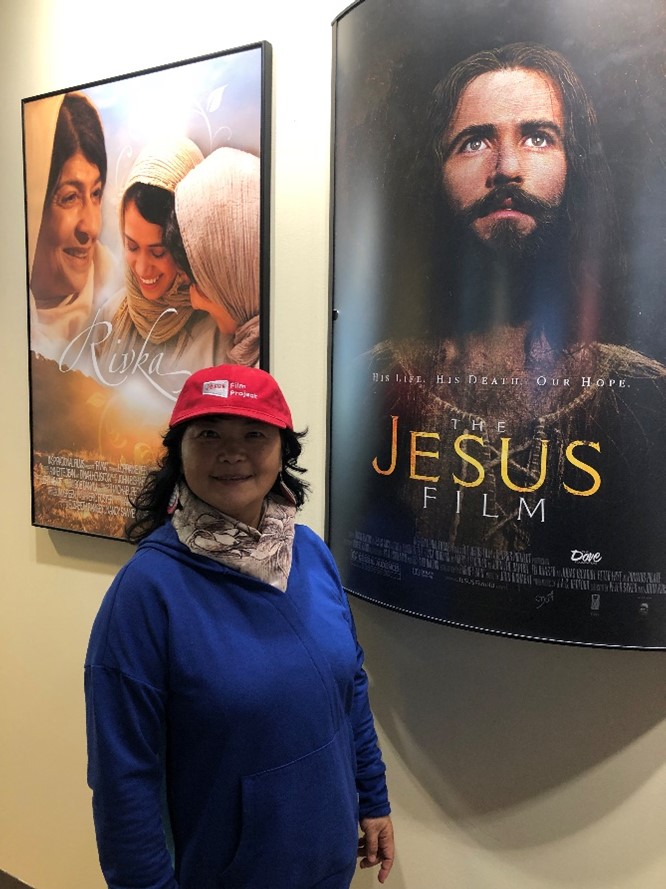
In 1989, Lin Lu encountered Christianity through an unexpected doorway: a classmate's invitation to a home gathering where two Filipino missionary sisters showed a Chinese-translated videotape of The Jesus Film. It was a turbulent moment in modern Chinese history—only weeks before the June 4, 1989 crackdown in Beijing—when young people carried anxiety in their bodies and uncertainty in their futures.
When the film ended, the narrator invited viewers to pray. Lin Lu bowed her head. She has described that moment with unusual vividness: as if she had fallen into the embrace of the father she had missed all her life. It was not an argument that persuaded her, but a felt recognition—like a name suddenly given to a peace she had once tasted as a child and could not explain.
Yet the story did not become instantly clean. Faith did not immediately heal what had accumulated through years of loss and guardedness. When her marriage ended in 1995, she fell into severe depression and drifted away from religious community. Looking back, her life suggests a truth many readers recognize: healing is rarely instant. Often it is a slow return.
Her return did not come through a dramatic spectacle. It came through ordinary care—the kind that repeats itself until it becomes a lifeline. A Christian neighbor invited her to worship and then welcomed her into her home three days a week to study Scripture. At noon, the neighbor fed her a simple meal: a bowl of noodles, an egg, and pickled vegetables. The detail remains vivid because it captures Lin Lu's theology of restoration: not performance, not pressure—companionship. The ordinary rhythm mattered. It helped her stay alive long enough to become whole.
If Lin Lu's early life trained her to hide sorrow, this season trained her to receive care without earning it. It was a slow rewiring: learning that love could be steady, that faith could be lived in the unremarkable, and that the human heart sometimes heals through repetition—through presence that shows up again tomorrow.
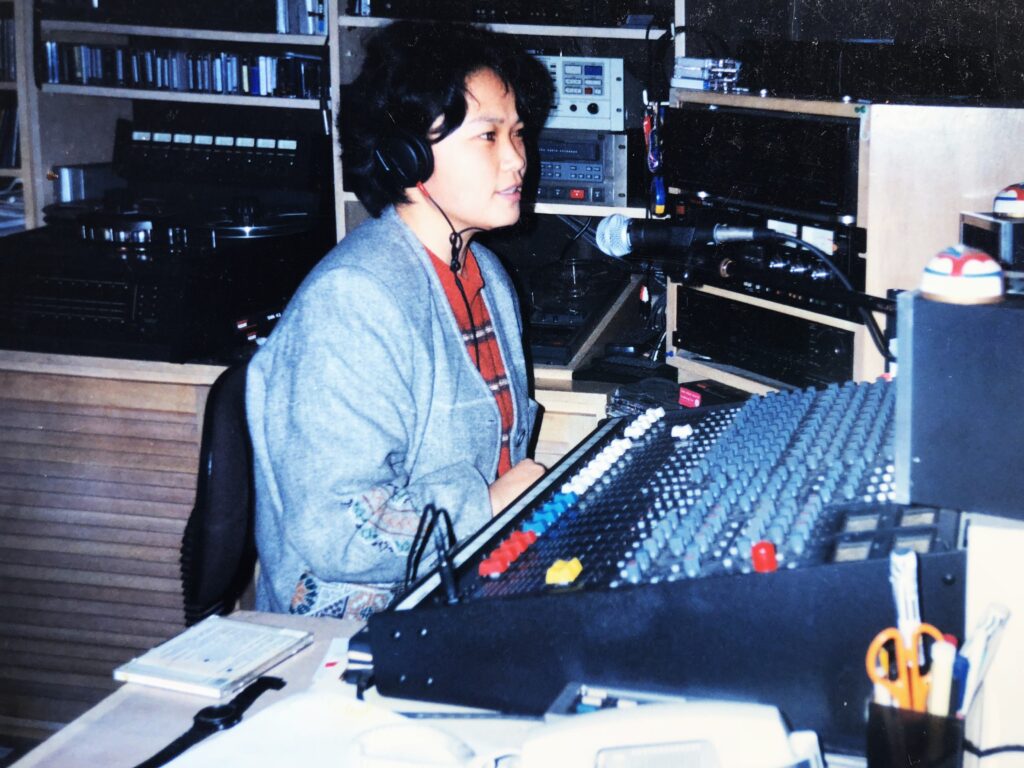
In 2000, while living in Manila and volunteering with a faith-based media ministry, Lin Lu picked up a paintbrush for the first time at age thirty-eight. She had no formal art training. The impulse arrived after reading stories of disabled women who painted despite severe physical limitations—artists who created under weight most people could not imagine.
Their perseverance awakened something in her: if creation was possible under such weight, perhaps it was possible for her too.
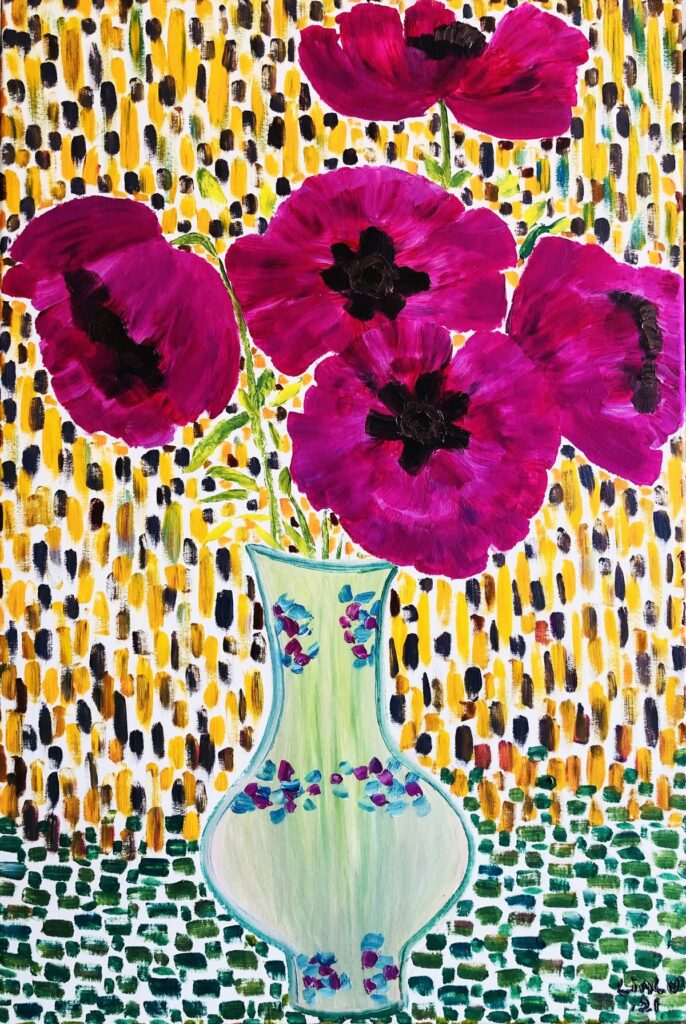
Painting began not as a career plan but as a kind of breathing—like learning to speak again, but in color. Over time, a distinctive visual language emerged: semi-surreal realism threaded with recurring motifs she returns to like a personal vocabulary—suitcases, bridges, water, windows, hands, and light. Many works are anchored to specific dates, places, and real events, functioning as both memory and testimony.
Lin Lu calls them healing diary paintings. The phrase matters. A diary is not a performance. It is an intimate record, often made in real time, often unfinished, honest enough to hold contradiction. Her paintings carry that same quality: emotionally precise, symbol-rich, and unafraid of what feels unfinished.
One representative work from her visual world centers on a recurring motif: the red suitcase. In Lin Lu's visual grammar, the suitcase is both literal and symbolic—a container for what a person carries, and a place where memory can be opened without being destroyed by what spills out.
The image often holds a tension: the weight of history inside the suitcase, and the possibility of release beyond it. Bridges appear not as scenery but as psychological crossings. Water becomes both danger and cleansing. Windows serve as thresholds—places where the outside world presses against the private interior. Hands—divine or human—recur as quiet claims: someone has not let go.
Even for viewers unfamiliar with her biography, the paintings communicate a particular kind of truth: trauma is not erased; it is held, re-read, and re-lived into meaning.
In 2020, Lin Lu published The Red Leather Suitcase, a healing memoir that includes hundreds of oil paintings. The work received the 2020 Yage Christian Literary and Arts Award for Literature from Duke University's Center for Theology and the Arts. Two years later, she published Dear Peter, focusing on conflict and reconciliation within a mother-son relationship.
Her more recent work expands beyond personal history into a wider documentary scope. In 2025, she released a three-volume, English-language illustrated nonfiction project that bridges cultural distance for English-speaking audiences—linking faith, memory, and freedom through paintings and oral testimonies of Chinese Christians. Early Rain: Chinese House Church and the Imprisonment of Pastor Wang Yi was published in partnership with TBN | Trilogy Christian Publishing, while the other two volumes—Voices Through the Rain and A Modern-Day Mayflower Pilgrimage—were published independently on Amazon.
That shift—from inward healing to outward witness—did not feel like a career move to Lin Lu. It felt like a responsibility: to record, to translate, and to refuse the burial of truth under pressure.
The trilogy also traces the story of Early Rain Covenant Church in Chengdu, where Lin Lu participated in the early Bible study fellowship that preceded the formal church. After Pastor Wang Yi and multiple coworkers were arrested in December 2018—and he was later sentenced to nine years in prison—Lin Lu understood her role with sudden clarity: some remained in China to endure the refining of prison; others, she believes, were sent by God to the United States to raise their voices.
In the first week of 2026, that story has continued to unfold in real time. On January 6, 2026, reports from Chengdu and nearby Deyang indicated a coordinated operation targeting multiple elders, preachers, and deacons connected to Early Rain, along with some of their family members. Several were reportedly taken away or placed under control, with home raids, restrictions on personal freedom, and loss of contact as the day progressed. Details are still developing, but the pattern echoes what Lin Lu has sought to document for English-speaking readers: for many Chinese Christians, public worship and ordinary church life can still carry a real and immediate cost.
Her three volumes are available on Amazon. Voices Through the Rain: The Story of Pastor Wang Yi and Early Rain Church Through an Artist's Eyes can be found at https://a.co/d/bJ1tWfS. A Modern-Day Mayflower Pilgrimage: Oral Histories of Sixteen Families in Exile is available at https://a.co/d/5BShmg1. Early Rain: Chinese House Church and the Imprisonment of Pastor Wang Yi is listed at https://a.co/d/5iUpxD7.
Lin Lu's practice sits at a rare intersection of contemporary narrative painting, religious freedom, and healing. Her work speaks to museum and gallery visitors drawn to story-driven art, to faith communities wrestling with suffering and hope, to Chinese diaspora audiences navigating identity and displacement, and to readers following questions of conscience and persecution.
Yet the New Year frame pulls the story back to its simplest form: a life that once felt scattered is now seen as connected. For Lin Lu, God's fingerprints do not mean trauma disappears. The paintings insist on something both sober and hopeful: repair can be practiced within trauma, and meaning can be discovered without rewriting history. In the first days of 2026, she says she can see the line again: the Lord has been faithful—present all along—and still leading her forward.
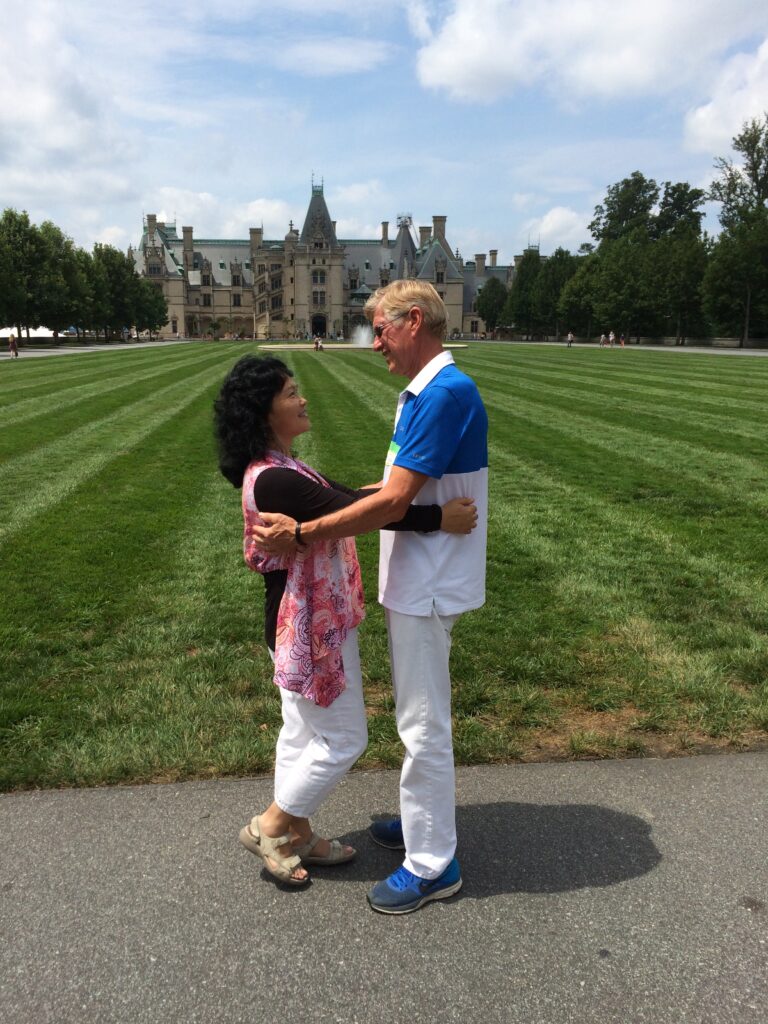
She serves alongside her husband David, a Christian counselor, in caring and ministry work. Together they focus on life integration and restoration, combining her visual testimony with his counseling practice. At fifty, she remarried and continues what she calls a sustained journey of healing and renewal through faith and relationship.
And the message she hopes American readers carry into a new year is direct and gentle: your life also has a line. You may not see it today. But you are not abandoned in the fragments. He is assembling the whole picture.
Lin Lu's New Year vision is to begin preparing a solo exhibition in celebration of America's 250th anniversary—and she is praying for God to open the doors and partnerships to bring it to life.


 In 1989, Lin Lu encountered Christianity through an unexpected doorway: a classmate's invitation to a home gathering where two Filipino missionary sisters showed a Chinese-translated videotape of The Jesus Film. It was a turbulent moment in modern Chinese history—only weeks before the June 4, 1989 crackdown in Beijing—when young people carried anxiety in their bodies and uncertainty in their futures.
When the film ended, the narrator invited viewers to pray. Lin Lu bowed her head. She has described that moment with unusual vividness: as if she had fallen into the embrace of the father she had missed all her life. It was not an argument that persuaded her, but a felt recognition—like a name suddenly given to a peace she had once tasted as a child and could not explain.
Yet the story did not become instantly clean. Faith did not immediately heal what had accumulated through years of loss and guardedness. When her marriage ended in 1995, she fell into severe depression and drifted away from religious community. Looking back, her life suggests a truth many readers recognize: healing is rarely instant. Often it is a slow return.
Her return did not come through a dramatic spectacle. It came through ordinary care—the kind that repeats itself until it becomes a lifeline. A Christian neighbor invited her to worship and then welcomed her into her home three days a week to study Scripture. At noon, the neighbor fed her a simple meal: a bowl of noodles, an egg, and pickled vegetables. The detail remains vivid because it captures Lin Lu's theology of restoration: not performance, not pressure—companionship. The ordinary rhythm mattered. It helped her stay alive long enough to become whole.
In 1989, Lin Lu encountered Christianity through an unexpected doorway: a classmate's invitation to a home gathering where two Filipino missionary sisters showed a Chinese-translated videotape of The Jesus Film. It was a turbulent moment in modern Chinese history—only weeks before the June 4, 1989 crackdown in Beijing—when young people carried anxiety in their bodies and uncertainty in their futures.
When the film ended, the narrator invited viewers to pray. Lin Lu bowed her head. She has described that moment with unusual vividness: as if she had fallen into the embrace of the father she had missed all her life. It was not an argument that persuaded her, but a felt recognition—like a name suddenly given to a peace she had once tasted as a child and could not explain.
Yet the story did not become instantly clean. Faith did not immediately heal what had accumulated through years of loss and guardedness. When her marriage ended in 1995, she fell into severe depression and drifted away from religious community. Looking back, her life suggests a truth many readers recognize: healing is rarely instant. Often it is a slow return.
Her return did not come through a dramatic spectacle. It came through ordinary care—the kind that repeats itself until it becomes a lifeline. A Christian neighbor invited her to worship and then welcomed her into her home three days a week to study Scripture. At noon, the neighbor fed her a simple meal: a bowl of noodles, an egg, and pickled vegetables. The detail remains vivid because it captures Lin Lu's theology of restoration: not performance, not pressure—companionship. The ordinary rhythm mattered. It helped her stay alive long enough to become whole.
 That shift—from inward healing to outward witness—did not feel like a career move to Lin Lu. It felt like a responsibility: to record, to translate, and to refuse the burial of truth under pressure.
The trilogy also traces the story of Early Rain Covenant Church in Chengdu, where Lin Lu participated in the early Bible study fellowship that preceded the formal church. After Pastor Wang Yi and multiple coworkers were arrested in December 2018—and he was later sentenced to nine years in prison—Lin Lu understood her role with sudden clarity: some remained in China to endure the refining of prison; others, she believes, were sent by God to the United States to raise their voices.
In the first week of 2026, that story has continued to unfold in real time. On January 6, 2026, reports from Chengdu and nearby Deyang indicated a coordinated operation targeting multiple elders, preachers, and deacons connected to Early Rain, along with some of their family members. Several were reportedly taken away or placed under control, with home raids, restrictions on personal freedom, and loss of contact as the day progressed. Details are still developing, but the pattern echoes what Lin Lu has sought to document for English-speaking readers: for many Chinese Christians, public worship and ordinary church life can still carry a real and immediate cost.
Her three volumes are available on Amazon. Voices Through the Rain: The Story of Pastor Wang Yi and Early Rain Church Through an Artist's Eyes can be found at https://a.co/d/bJ1tWfS. A Modern-Day Mayflower Pilgrimage: Oral Histories of Sixteen Families in Exile is available at https://a.co/d/5BShmg1. Early Rain: Chinese House Church and the Imprisonment of Pastor Wang Yi is listed at https://a.co/d/5iUpxD7.
Lin Lu's practice sits at a rare intersection of contemporary narrative painting, religious freedom, and healing. Her work speaks to museum and gallery visitors drawn to story-driven art, to faith communities wrestling with suffering and hope, to Chinese diaspora audiences navigating identity and displacement, and to readers following questions of conscience and persecution.
Yet the New Year frame pulls the story back to its simplest form: a life that once felt scattered is now seen as connected. For Lin Lu, God's fingerprints do not mean trauma disappears. The paintings insist on something both sober and hopeful: repair can be practiced within trauma, and meaning can be discovered without rewriting history. In the first days of 2026, she says she can see the line again: the Lord has been faithful—present all along—and still leading her forward.
That shift—from inward healing to outward witness—did not feel like a career move to Lin Lu. It felt like a responsibility: to record, to translate, and to refuse the burial of truth under pressure.
The trilogy also traces the story of Early Rain Covenant Church in Chengdu, where Lin Lu participated in the early Bible study fellowship that preceded the formal church. After Pastor Wang Yi and multiple coworkers were arrested in December 2018—and he was later sentenced to nine years in prison—Lin Lu understood her role with sudden clarity: some remained in China to endure the refining of prison; others, she believes, were sent by God to the United States to raise their voices.
In the first week of 2026, that story has continued to unfold in real time. On January 6, 2026, reports from Chengdu and nearby Deyang indicated a coordinated operation targeting multiple elders, preachers, and deacons connected to Early Rain, along with some of their family members. Several were reportedly taken away or placed under control, with home raids, restrictions on personal freedom, and loss of contact as the day progressed. Details are still developing, but the pattern echoes what Lin Lu has sought to document for English-speaking readers: for many Chinese Christians, public worship and ordinary church life can still carry a real and immediate cost.
Her three volumes are available on Amazon. Voices Through the Rain: The Story of Pastor Wang Yi and Early Rain Church Through an Artist's Eyes can be found at https://a.co/d/bJ1tWfS. A Modern-Day Mayflower Pilgrimage: Oral Histories of Sixteen Families in Exile is available at https://a.co/d/5BShmg1. Early Rain: Chinese House Church and the Imprisonment of Pastor Wang Yi is listed at https://a.co/d/5iUpxD7.
Lin Lu's practice sits at a rare intersection of contemporary narrative painting, religious freedom, and healing. Her work speaks to museum and gallery visitors drawn to story-driven art, to faith communities wrestling with suffering and hope, to Chinese diaspora audiences navigating identity and displacement, and to readers following questions of conscience and persecution.
Yet the New Year frame pulls the story back to its simplest form: a life that once felt scattered is now seen as connected. For Lin Lu, God's fingerprints do not mean trauma disappears. The paintings insist on something both sober and hopeful: repair can be practiced within trauma, and meaning can be discovered without rewriting history. In the first days of 2026, she says she can see the line again: the Lord has been faithful—present all along—and still leading her forward.
 She serves alongside her husband David, a Christian counselor, in caring and ministry work. Together they focus on life integration and restoration, combining her visual testimony with his counseling practice. At fifty, she remarried and continues what she calls a sustained journey of healing and renewal through faith and relationship.
And the message she hopes American readers carry into a new year is direct and gentle: your life also has a line. You may not see it today. But you are not abandoned in the fragments. He is assembling the whole picture.
Lin Lu's New Year vision is to begin preparing a solo exhibition in celebration of America's 250th anniversary—and she is praying for God to open the doors and partnerships to bring it to life.
She serves alongside her husband David, a Christian counselor, in caring and ministry work. Together they focus on life integration and restoration, combining her visual testimony with his counseling practice. At fifty, she remarried and continues what she calls a sustained journey of healing and renewal through faith and relationship.
And the message she hopes American readers carry into a new year is direct and gentle: your life also has a line. You may not see it today. But you are not abandoned in the fragments. He is assembling the whole picture.
Lin Lu's New Year vision is to begin preparing a solo exhibition in celebration of America's 250th anniversary—and she is praying for God to open the doors and partnerships to bring it to life.