

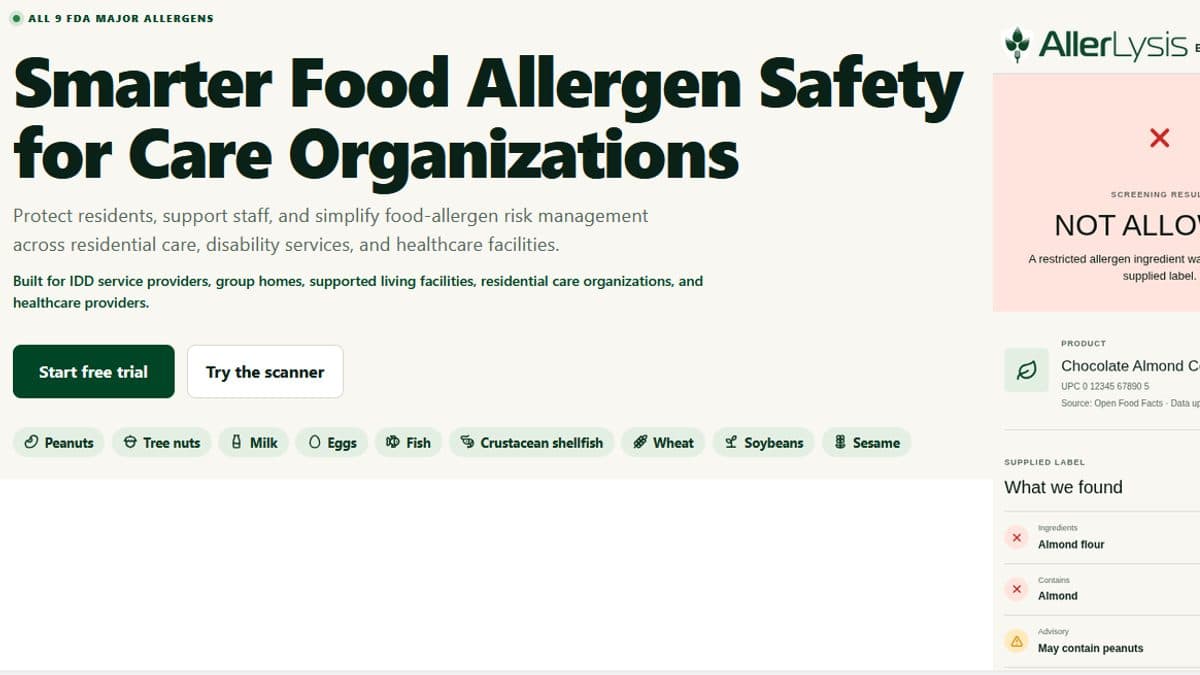
AllerLysis, an allergen risk mitigation system for healthcare organizations, has been adopted by 12 residential facilities in Illinois. The system is designed to prevent fatalities by helping facilities manage allergen risks and actuate intake records.
The company was founded after a direct experience with a fatality caused by a tiny item overlooked when brought into a facility. That experience led to the development of AllerLysis, which goes beyond food scanning to provide an all-around tool for allergen risk mitigation. Facilities trust AllerLysis for end-to-end risk management.
AllerLysis serves IDD service providers, group homes, supported living facilities, residential care organizations, and healthcare providers. The system helps these organizations track and manage allergen risks for residents, a critical need given that overlooking a product or assuming it is wholesome without considering a resident's allergy profile can lead to medical emergencies.
Oladipo O, founder of AllerLysis, said: "Overlooking a product or assuming it is wholesome and consumable to residents without minding their allergy profile can lead to medical emergencies." He added: "With Allerlysis every check matters."
The company's approach is comprehensive. Rather than functioning solely as a food scanning app, AllerLysis provides an end-to-end allergen risk mitigation system. This includes intake record actuation, which helps facilities maintain accurate and up-to-date information on residents' allergies. By integrating allergen checks into daily operations, AllerLysis aims to reduce the risk of accidental exposure and prevent fatalities.
Facilities using allergen risk mitigation for residential care can benefit from a system that supports compliance and enhances resident safety. The adoption by 12 residential facilities in Illinois demonstrates growing recognition of the need for thorough allergen management in care settings.
AllerLysis is headquartered in Chicago, IL. The company's focus on healthcare organizations reflects the high stakes involved in residential care, where a single overlooked allergen can have severe consequences.