

As temperatures continue to rise, Tampa Bay residents are experiencing more days above 90 degrees, raising concerns about heat safety and preparedness.
The City of Tampa, the University of Tampa and The CLEO Institute joined together for a panel discussion to educate residents on the heat index, extreme heat risks and ways to stay safe during the summer months.
Chief Meteorologist and Climate Specialist Jeff Berardelli said Tampa has seen a significant increase in days reaching 90 degrees or higher. Berardelli said in 1970, Tampa averaged about 60 days above 90 degrees and now Tampa averages around 120 days.
The increase in extreme heat raised concerns during the panel about outdoor workers and vulnerable communities across Tampa Bay.
"We have to be proactive in shaping the way we travel and supporting employees faced with outdoor work," said Mackenzie Ball, airport safety at Tampa International Airport.
Ball said Tampa International Airport is working to maintain operations while protecting employees from rising temperatures. Measures include mandatory breaks in air-conditioned areas, cooling towels and electrolytes available for outdoor workers.
"A safety-minded culture is how change happens," Ball said.
When temperatures rise above 90 degrees, airport employees follow a 20-minutes-on and 40-minutes-off schedule to help prevent heat-related illnesses.
Ball said residents can follow similar practices in their daily lives.
"Take your breaks no matter what that means. We all have authority to have a break," Ball said. "You have to stay hydrated, but don't over hydrate — have some salt and electrolytes too."
The City of Tampa has developed a resilience playbook focused on addressing extreme heat through four areas: reducing heat risk for all, increasing access to cooling spaces, maximizing the benefits of tree canopies and adapting the built environment to extreme heat impacts.
The city also has HEATSAFE Alerts, which notify residents when extreme heat conditions are expected and provide information about cooling locations and heat safety tips. Residents can sign up by texting HEATSAFE to 888-777.
"The city has a goal to plant 30,000 trees by 2030 through the Trees for Tampa Program," said Kayla Caselli, sustainability and resilience officer for the City of Tampa. "Another thing we've done is launched a program called Weather Wise. It's specific to Sulphur Springs and West Tampa, two typically more vulnerable neighborhoods, and offers adaptive solutions to weather hazards."
Through Weather Wise, Caselli said the city provides partial stipends or can cover the full cost of improvements such as cool roofs and window films.
"We heard from small businesses in those areas that they were the only business on their block that would have power in the neighborhoods, so we're offering solar panels with battery backups," Caselli said.
She said the program could expand to help more communities in the future.
A newspaper titled "It's Hot Out There," created by the Tampa Bay Times, Enterprising Latinas and Allegany Franciscan Ministries, also provides heat safety guidance for outdoor workers.
The publication recommends employers educate workers about preventing heat-related illnesses by providing training, water, shaded areas, required breaks and adjusting schedules when conditions become unsafe.
According to the publication, outdoor workers in the United States face up to 35 times the risk of dying from heat exposure compared to the general population.
"By 2050, up to 40 workdays per year would be unsafe due to extreme heat in Hillsborough County, putting $594,620,709 in outdoor workers' earnings at risk," according to the publication.
Residents and workers should also know the warning signs of heat-related illnesses.
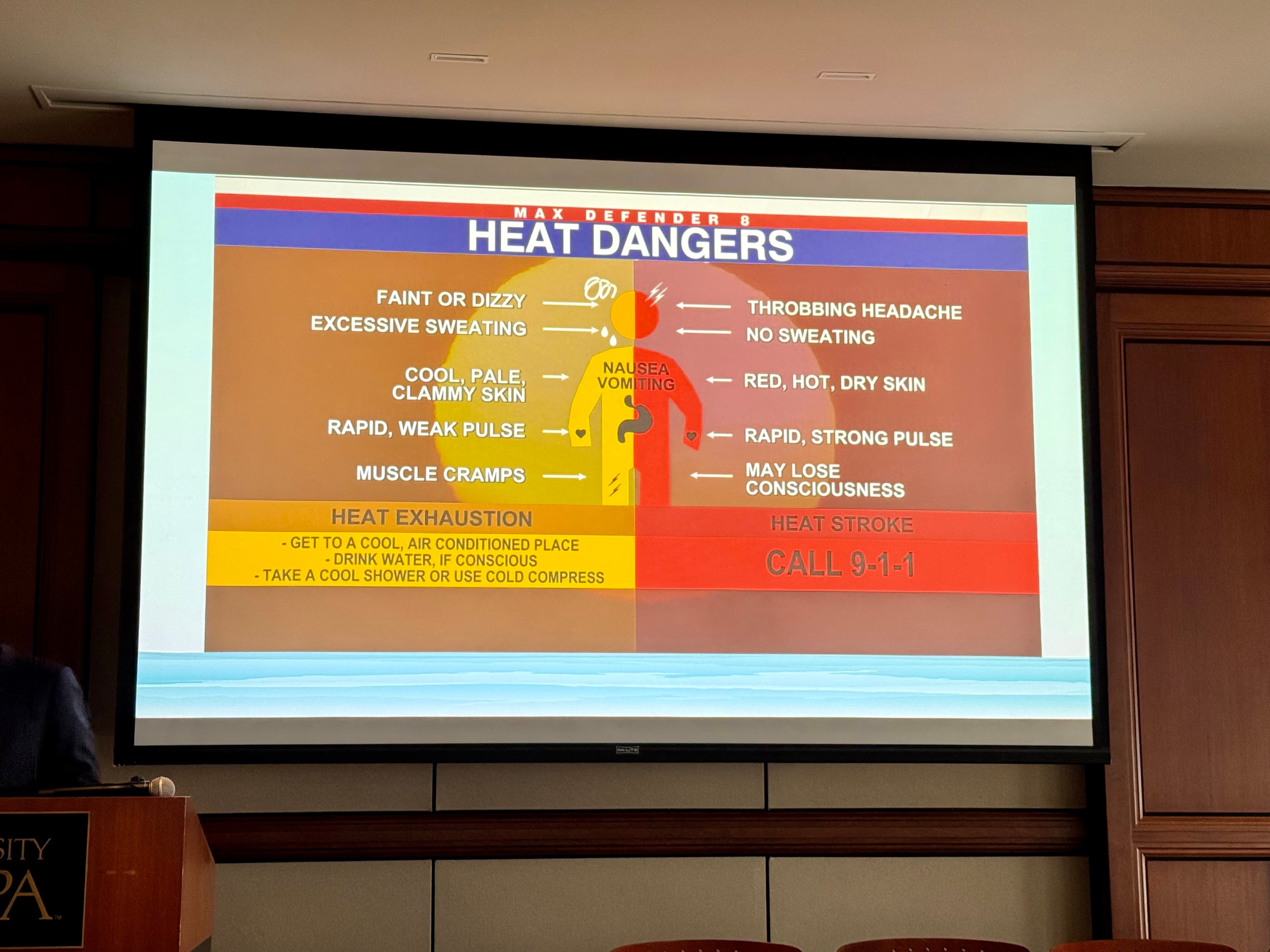
Heat cramps can cause muscle cramping, pain or spasms in the stomach, arms or legs. People experiencing cramps should move to a cool location, drink water or electrolytes and seek medical help if symptoms last longer than an hour.
Heat exhaustion symptoms include heavy sweating, weakness, rapid pulse, headaches, nausea, vomiting, dizziness and fatigue. Those experiencing symptoms should move to a cooler location, loosen clothing, cool the body and seek medical care if symptoms continue.
Heat stroke is a medical emergency. Symptoms can include high body temperature, fainting, confusion, seizures, vomiting and rapid breathing. Call 911 immediately, move the person to a cooler area and try to lower their body temperature. Do not give someone experiencing heat stroke anything to drink.
Throughout the day, heat safety recommendations include drinking water regularly, taking breaks, finding shade and avoiding prolonged outdoor activity during peak heat.
AARP Florida also recommends spending time in air-conditioned spaces, taking cool showers, using damp cloths around the neck, avoiding alcohol, eating water-rich foods, checking on others, wearing lightweight clothing, using sunscreen and recognizing early signs of heat illness.
As Tampa Bay continues facing hotter conditions, officials say preparation, access to cooling resources and awareness of heat risks will remain key to keeping residents safe this summer.