

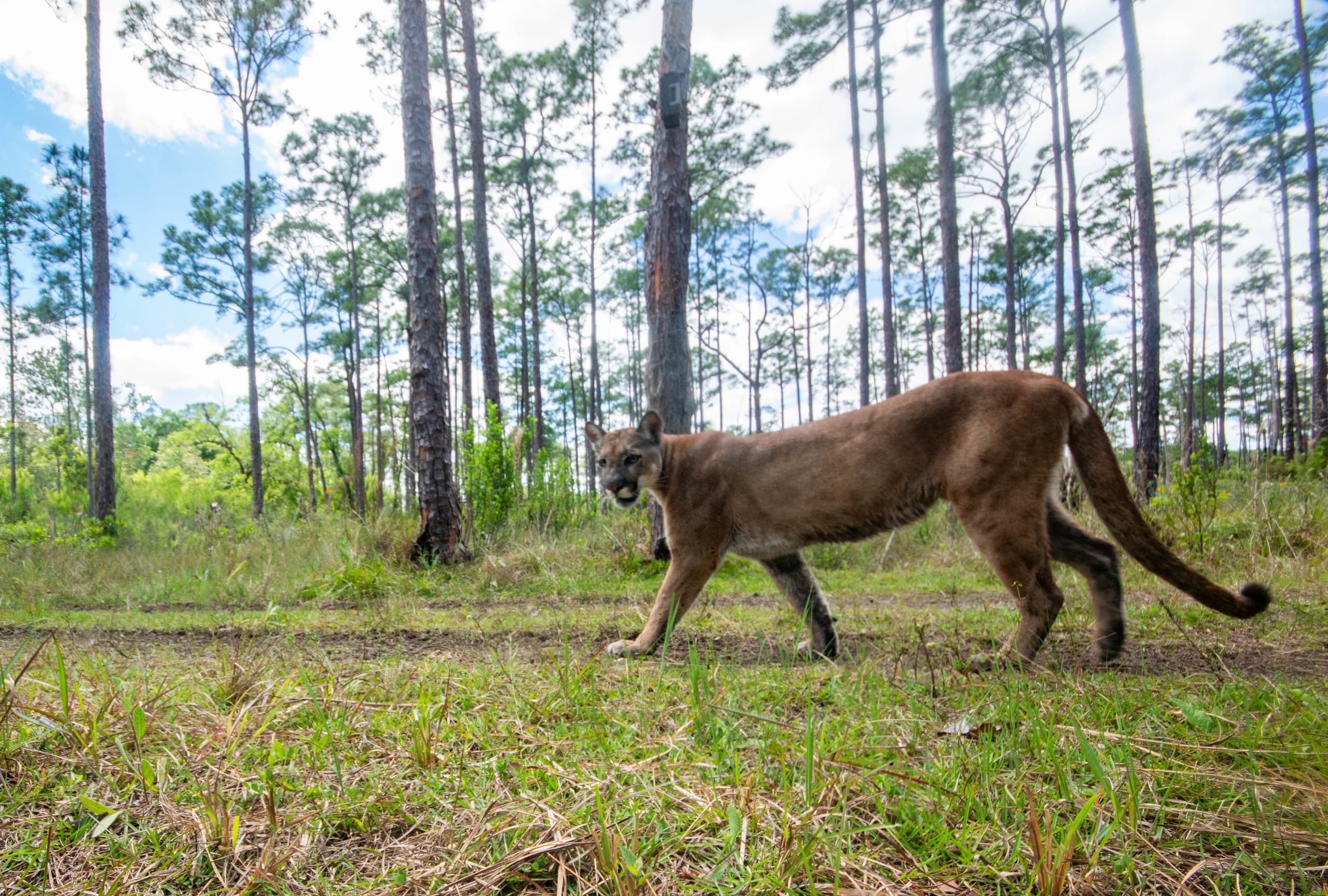
Conservation groups have filed a lawsuit agains the U.S. Fish and Wildlife Service and U.S. Army Corps of Engineers, aiming to protect endangered Florida Panthers from a proposed 10,264-acre residential and mix-use development in Collier County.
The lawsuit was filed in U.S. District Court in Fort Myers by the Center for Biological Diversity, South Florida Wildlands Association and the Sierra Club. The conservation groups said federal agencies violated the Endangered Species Act by allowing the development to move forward.
"This is just increasing the danger and the risk to our state animal. There's things that the service has to do. They first have to decide on the baseline condition of the species," said Matthew Schwartz, executive director South Florida Wildlands Association."If the panthers are already in a state of baseline jeopardy, then this project is just one more big nail in the coffin and should not be moving forward."
Schwartz said the lawsuit is not only focused on this specific project but also on what he describes as a broader failure by federal wildlife officials to determine whether the species is in jeopardy.
"Panther is a good symbol of wild Florida and if the symbol of wild Florida can't survive what does that say about the state?" Schwartz said.
Motor vehicle collisions remain the leading cause of death for Florida panthers. In 2026, at least five panthers have already died, all due to vehicle strikes. Schwartz said increased development reduces habitat while adding more roads and traffic increases the likelihood of fatal encounters.
"The Florida Panther is an endangered species and is federally listed. One of the main responsibility of any federal agency is to not put an endangered species in jeopardy. That is illegal and this project along with all the others on the way can very easily put the panther in jeopardy, where the liklihood of its continued existence and its chances of recovery are in grave doubt," Schwartz.
Schwartz said it remains unclear how the population can recover amid continued development pressures.
According to the U.S Fish and Wild Life Service website said the Rural Lands West project includes plans to restore 5,242 acres of native vegetation and improve hydrology. Officials say the design will allow panthers and other wildlife to move through the area, with designated wildlife crossings, traffic controls, and speed reduction measures.
"Some pets in the new development will almost surely be killed off by panthers and will be in constant danger, especially if left outside. Panthers that have territories in the area will also likely be killed off by the new roads and traffic," Schwartz said.
There are fewer than 200 adult Florida Panthers left in the wild, and the numbers continue to face pressure from disease, habitat loss, vehicle collisions and climate change.
According to the U.S. Fish and Wildlife Service's Florida Panther Recovery Plan, there needs to be three viable self-sustaining populations of at least 240 panthers each for the population to be considered recovered. Schwartz said right now there is only one breeding population of around 120 to 230 panthers.
"Collier County government is allowing these residential expansions in rural areas and ignoring the fact it's habitat that's already occupied by our state animal" Schwartz said.
In a press release, The Center for Biological Diversity said the U.S. Fish and Wildlife Service developed a plan to help Florida Panthers recover nearly 20 years ago, but since then the panthers have lost more than 30,000 acres of habitat.
At this time The U.S. Fish and Wildlife Service and U.S. Army Corps of Engineers have not answered for comment on the lawsuit.