


After three decades leading beauty brands at Procter & Gamble, Robert van Pappelendam has turned his attention to solving one of business's most persistent problems: why nine out of ten start-ups fail.
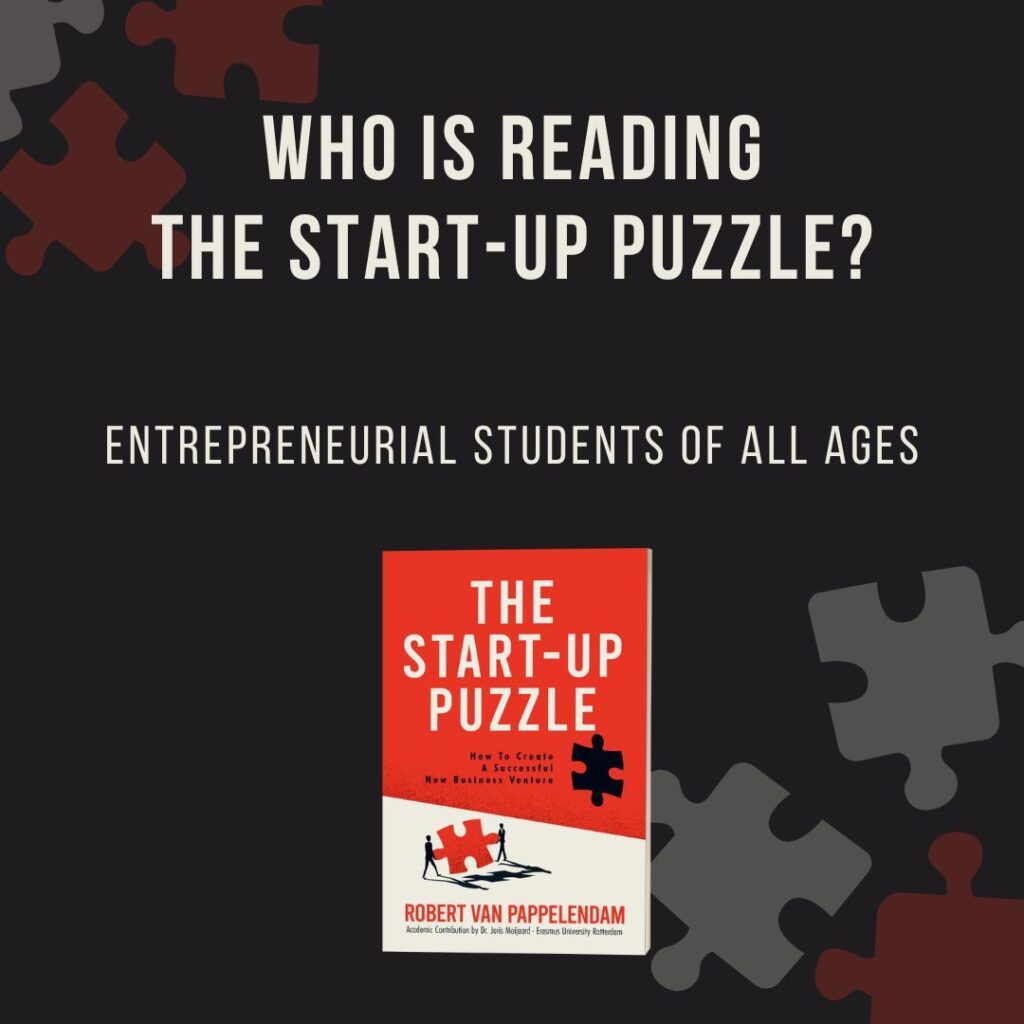
Van Pappelendam, who held senior operational roles across Europe, North America and Asia during his tenure at the consumer goods giant, partnered with Rotterdam School of Management at Erasmus University to create "The Start-up Puzzle," a guide that distills the venture creation process into under 20,000 words.
The publication arrives as rising interest rates squeeze capital availability for new ventures. During the low-interest environment of recent years, start-ups enjoyed easier access to funding. Now, with capital becoming scarcer, van Pappelendam argues that improving success rates has become critical for maintaining economic growth.
"We live in a world flooded with content & information, where a quick online search spits out thousands of articles yet rarely offers the curated knowledge you are looking for," van Pappelendam said, explaining the rationale behind the concise format.
The guide draws from van Pappelendam's experience across mergers, acquisitions and start-ups in fast-moving consumer goods, luxury and medical technology sectors. Known as "Dr. Reframe" for his ability to simplify complex business problems, he currently serves as a consultant at Kinetic Consulting in Geneva and lectures at Erasmus University.
What distinguishes this publication from traditional business books is its brevity. While most entrepreneurship guides exceed 100,000 words and focus on single aspects of building a company, van Pappelendam's framework covers the entire start-up journey in roughly one-fifth that length. The approach combines academic theory with real-world examples and interviews with private equity professionals, investment bankers and serial entrepreneurs.
Early market reception suggests the format resonates with readers. The book reached bestseller lists within months of launch and earned multiple awards. Reviews on Amazon and Goodreads highlight its practical value, with endorsements from both academic institutions and entrepreneurship communities.
The publication represents the first in a planned series called "Business Puzzles," modeled after the concise legal guides van Pappelendam encountered as a law student. Each edition will address common business challenges in digestible formats. "The Innovation Puzzle" is already in development, with "The Premium Growth Puzzle" to follow.
Students, aspiring entrepreneurs and professionals within existing start-ups comprise the primary audience, though van Pappelendam notes the guide also serves established business professionals seeking to understand venture creation dynamics. Master's students and faculty from Erasmus University's entrepreneurship program reviewed early drafts to ensure the content met user needs.
The author points to a gap between abundant theoretical business resources and practical guidance for real-world challenges. His mission centers on making critical business concepts accessible through careful curation rather than exhaustive detail.
Beyond the book itself, van Pappelendam has launched supplementary resources for entrepreneurs including podcasts, practical tools and additional interviews with industry experts. These materials expand on the book's framework while maintaining the same focus on actionable insights.
The timing addresses what van Pappelendam sees as an urgent need. Start-up success rates have remained stubbornly low for decades, hovering around 10%. Some incubators and private equity firms claim they achieve success in nine out of ten cases, suggesting that proper support and understanding can dramatically improve outcomes.
As interest rates rise and investment appetite potentially wanes, van Pappelendam argues that improving start-up success rates becomes essential. "If we don't do that, and starve the start-up world, we pay a hefty bill later," he noted.
The guide's combination of corporate experience and entrepreneurial insight reflects van Pappelendam's unusual career trajectory. After reaching senior executive status at one of the world's largest consumer goods companies, he transitioned into founding and advising start-ups while maintaining academic connections.
This dual perspective informs the book's approach, grounding practical examples in theoretical frameworks that can apply across industries. Rather than recounting single success stories or focusing on narrow aspects of entrepreneurship, the guide attempts to provide a complete overview of the venture creation process.
With "The Start-up Puzzle" gaining traction among its target audience, van Pappelendam's practical framework for start-up success may offer a template for addressing other business challenges through similarly concise, comprehensive guides. The test will be whether this condensed approach can meaningfully impact the persistent problem of start-up failure rates.