

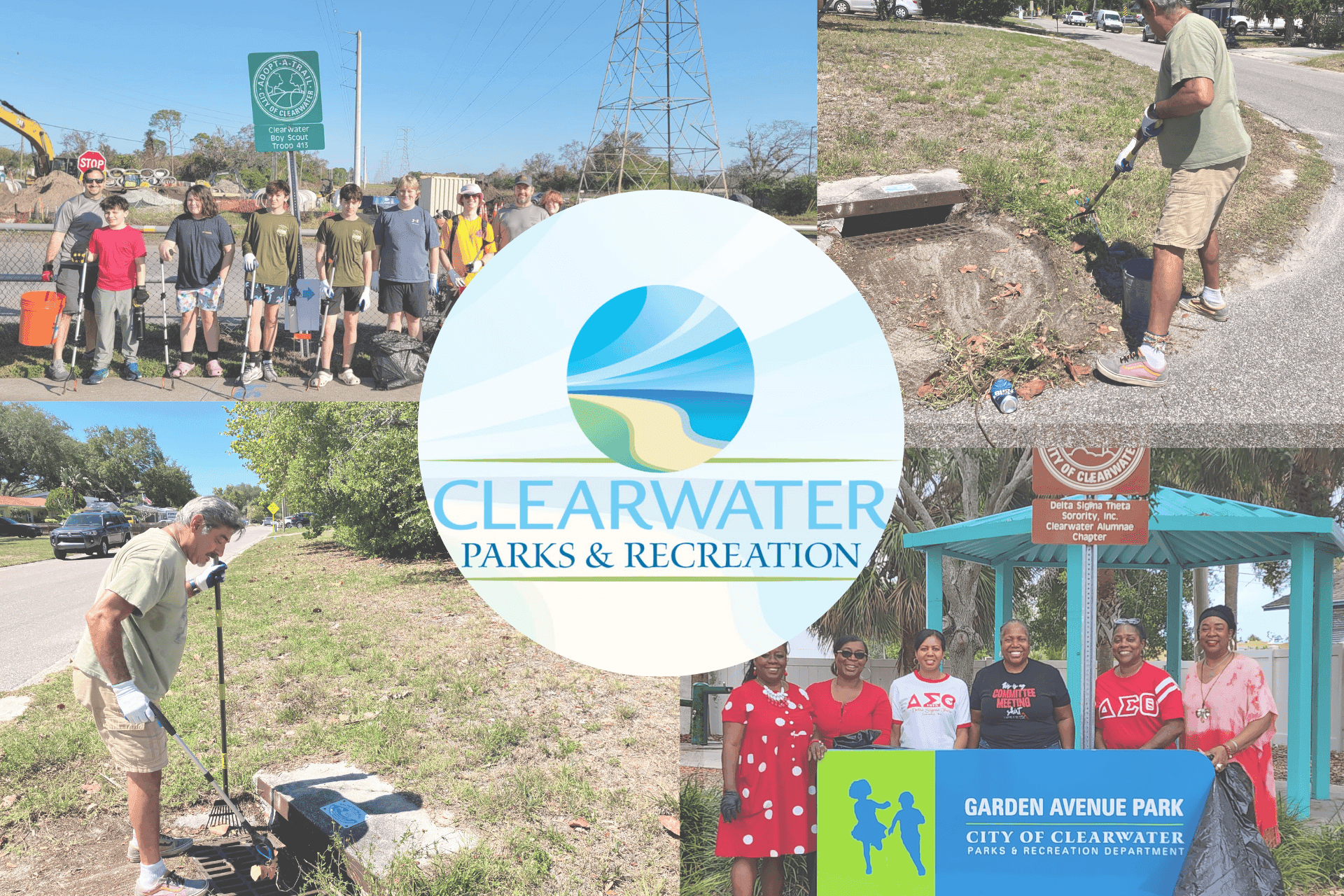
The City of Clearwater's Adopt-a-Park, Street, Trail and Drain programs are giving residents an opportunity to help maintain public spaces while building community pride.
The Adopt-a-Park, Street and Trail program has been around for years, while the Adopt-a-Drain program launched earlier this year. Together, the programs encourage volunteers to take an active role in keeping Clearwater clean and environmentally healthy.
Adopt-a-Park, Street and Trail has seen strong participation from local organizations, with 30 of Clearwater's 100 parks adopted and a majority of the city's trails currently under adoption agreements.
"This is all free to participate in. It's just a small online application to ensure you are picking an unchosen location, and I supply the resources to help the volunteers if larger beautification or restoration is needed," said Kelsy Johnson, volunteer specialist for the City of Clearwater Parks and Recreation Department.
Johnson said the program helps city staff extend their reach throughout Clearwater.
"With the volunteer program, we save the city hundreds of thousands of dollars in staff labor for every group able to clean up. It's a huge impact," Johnson said. "The program is also pulling in all the different elements of the community. City groups, families, businesses, nonprofits and more participate in this program, and it helps residents not feel separated from their communities."
Groups commit to a two-year contract when adopting a location. Once a beautification project is completed, a sign recognizing the group is displayed at the park, trail or street.
"Any city property streets that are Clearwater property can be adopted," Johnson said. "Trails and streets are adopted in a one-mile-long stretch, and park adoption means the whole park."
One adoption that stands out to Johnson is Bayview Park, which was adopted by a local Girl Scout troop.
"They adopted Bayview Park along the water and have made a significant difference in the amount of litter along the water and in the park over the years," Johnson said. "They have also planted mangroves at this site."
Another notable participant is Clearwater Marine Aquarium, which adopted both Lake Bellevue and Pier 60 Park.
"At both locations, they do environmental education such as sea turtle nesting season awareness," Johnson said. "At the Pier 60 Park location, they do sticker and graffiti removal in addition to litter cleanups."
When volunteers identify issues such as graffiti, paint chipping or other maintenance concerns, Johnson works with city departments to secure approval and provide the resources needed for restoration projects.
The city's newest volunteer initiative, Adopt-a-Drain, launched in January after recognizing the impacts the 2024 hurricane season had on Clearwater.
The idea came after there were a lot of flooding issues and we were looking for a way to engage the community and give opportunities for environmental stewardship," said Melody Yin, sustainability specialist with the City of Clearwater Public Works Department.
Before launching the program, Yin researched similar initiatives and worked with Hamline University in Minnesota to create a portal that allows local governments to implement adoption programs citywide.
"Through the process, we found approximately 5,500 storm drains and uploaded them to the website," Yin said. "Residents can go in and key in their home address and see what drains are adoptable around them."
Over the past several months, Yin and other staff members have attended community events and neighborhood meetings to educate residents about the program and how they can help reduce flooding.
"Blocked storm drains reduce water flow and cause flooding. Maintenance crews will eventually get to that spot, but the city still needs help from neighbors," Yin said. "While on walks, look for vegetation, plastic items, tree debris and other materials in the storm drains. Take note of it and clear it out."
Educational materials are available in both English and Spanish to help residents better understand stormwater management and debris removal.
"There are misconceptions that stormwater gets filtered underground, and that is not true," Yin said. "Any rain that comes from yards and streets carries debris and pollutants that eventually flow to the bay or the Gulf. Environmental protection is really important, and we are the last line of defense."
The program currently has 33 adopted drains, and Yin said interest continues to grow as neighborhoods find creative ways to participate.
"It's started to gain more attention as some neighborhoods are starting their own competition on who can name the better adopted drain," Yin said.
Residents interested in adopting a park, street, trail or storm drain can apply through the City of Clearwater's website.
City officials said the programs helps keep Clearwater spaces beautiful safe while also protecting the environment. Residents interested in participating can find more information and apply through the City of Clearwater's website.