

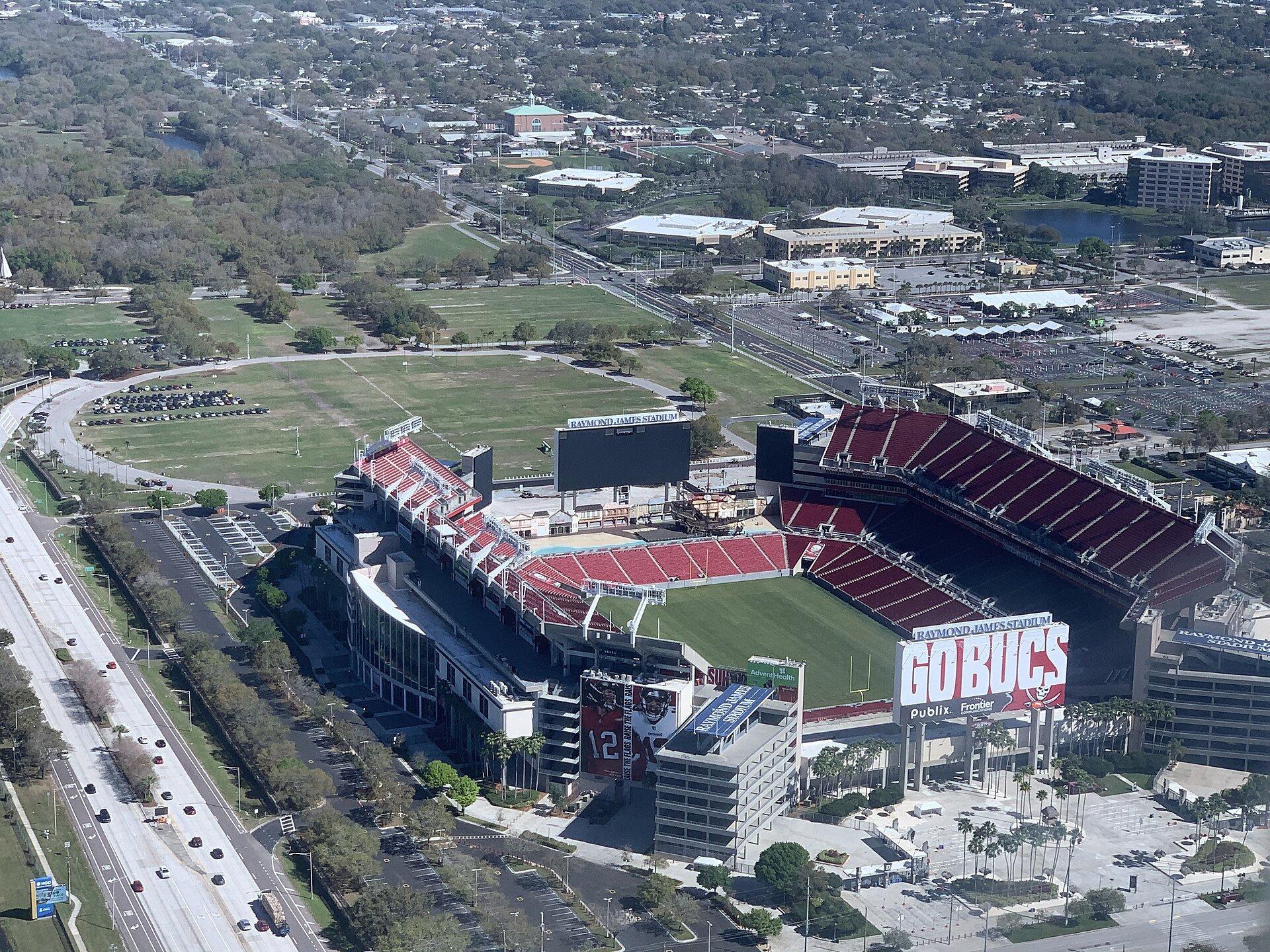
TAMPA — Hillsborough County commissioners pushed the Tampa Bay Rays' new ballpark another step forward Tuesday, approving the first $90 million in sales tax money and up to $263 million in tourist tax bonds, a week after voters passed the property tax cut in Amendment 3.
At the same meeting, commissioners unanimously banned concentrated and chemically altered kratom products, including 7-OH. Here's what happened, following our preview of Tuesday's agenda.
The Rays votes
Commissioners took four votes on the $2.36 billion stadium planned for Hillsborough College's Dale Mabry campus:
- Adding the ballpark to the list of projects eligible for the renewed Community Investment Tax, the half-cent sales tax that runs from December 2026 through December 2041.
- Appropriating $90 million from that tax's reserves to set up the stadium's initial budget for fiscal year 2027. That's the first piece of the county's $360 million sales tax commitment, WUSF reported.
- Adding the ballpark to the county's Tourist Development Plan, which covers bond payments and a separate $40 million payment from tourist tax reserves.
- A master bond resolution authorizing up to $263 million in bonds repaid from the third- and sixth-cent tourist development taxes, the hotel bed taxes paid mostly by visitors.
The first vote passed 5-2, with outgoing Commissioners Joshua Wostal and Donna Cameron Cepeda voting no, as they did on the original deal in August. Wostal then left the meeting, and the other three items passed 5-1 with Cameron Cepeda as the lone no, according to Florida Politics. Both lost their reelection races last week.
No money moves yet
The votes don't hand the Rays a check. The team still has to show proof of financing for its share, and the bonds have to clear a court validation process before the county can issue them.
“By approving this today, that doesn't mean we start giving the money over,” County Attorney Julia Mandell told commissioners.
Bond counsel said validation proceedings could begin in about two weeks, according to Florida Politics. Commissioners are expected to vote on final bond details and other financing documents next month, and Tampa City Council still has several votes left on the city's $80 million share, FOX 13 reported.
A lawsuit warning
Wostal argues the sales tax money can't legally go to a stadium because the 2024 referendum didn't list stadiums as a use, and he made clear he isn't done after his term ends.
“I'm about to have a lot more free time on my hands to ensure that the public is completely protected from this process,” Wostal said, according to FOX 13. “Don't you doubt that for a moment.”
The county attorney's legal opinions disagree. “We covered ourselves pretty well with the legal opinions that we got that authorized the use of the CIT and determined that it was a permissible use,” Commissioner Harry Cohen told FOX 13. “Part of the reason to pursue a bond validation is to preempt some of that.”
Public speakers were split. Some said Amendment 3's passage showed voters want the deal unwound. Others argued the jobs and development make it more important now. More than 80% of the county's planned contribution comes from tourist and sales taxes that Amendment 3 doesn't directly touch, but about $103 million is slated to come from other county funds, plus $30 million in federal disaster-recovery money, according to WUSF.
Concentrated kratom is now banned in unincorporated Hillsborough
After about two hours of emotional public comment, commissioners voted 7-0 to ban the manufacture, distribution, sale, display, marketing and advertising of kratom products that are concentrated or chemically altered, including 7-hydroxymitragynine, or 7-OH, and synthetic derivatives such as MGM-15 and MGM-16, WUSF reported.
Those products are sold at gas stations, convenience stores and smoke shops as tablets, gummies, capsules and liquid shots. Natural, unaltered kratom, including whole-leaf teas and powders, stays legal for adults 21 and older. Stores that keep selling it have to post warnings that it can't be sold to anyone under 21 and may cause serious health effects, with fines of up to $500 for skipping the sign, according to Florida Politics.
Selling the banned products is a misdemeanor punishable by up to 60 days in jail, a $500 fine or both. The ordinance covers unincorporated Hillsborough County.
Florida already lists concentrated 7-OH and related compounds as Schedule I drugs under an emergency rule, but that rule expires June 30, 2027, unless lawmakers make it permanent. Commissioners wanted a local ban that sticks either way.
Several families who lost loved ones asked for a ban on all kratom. Dana MacDonald, holding a photo of her son Cade, who she said died this year from acute kratom poisoning, told the board: “We should not accept addiction and death as the price of keeping a product on the shelves.” Kratom users and business owners argued natural kratom helps people manage pain or get off opioids.
Wostal, who first proposed the 7-OH restrictions in June as his final initiative, said a blanket ban could hurt people who use natural kratom to “normalize their life.” Cameron Cepeda said she'd eventually like to see all kratom sales banned. Commissioner Chris Boles called the vote “the first step in taking care of something that is hidden in a way, out in plain sight.”