

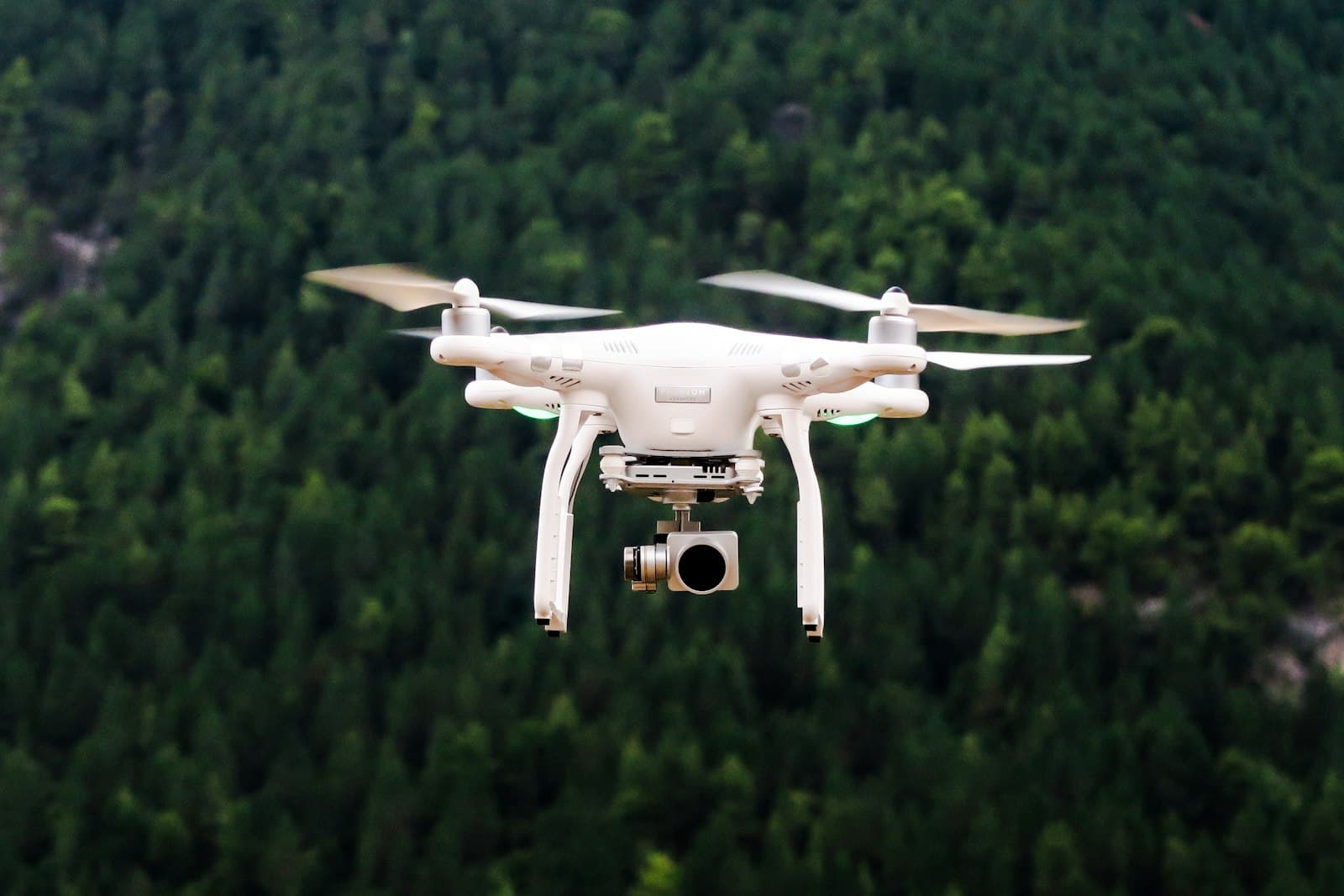
TAMPA — Hillsborough County Fire Rescue demonstrated a first-in-the-nation drone program Monday that will fly temperature-controlled whole blood to trauma scenes in minutes, aiming to start transfusions before patients ever reach a hospital.
The Hillsborough County Fire Rescue Drone Whole Blood Delivery Program pairs HCFR with Tampa General Hospital, Archer First Response Systems, OneBlood, USF Health and the Florida Center for EMS. County commissioners approved the pilot Sept. 2. Live operations are expected in October after Monday’s media demonstration at HCFR’s Public Safety Operations Complex on E. Columbus Drive.
“When you see one of our drones flying, you will know that it is on a life-saving mission,” Rescue Division Chief Todd Carnell told WFLA after the demo.
How the delivery works
A 911 operator or a paramedic on scene can request a unit of whole blood. An autonomous drone — monitored around the clock by Archer pilots who can change course if needed — flies to the call, then drops a cooler so crews can start a transfusion at the roadside or elsewhere before transport.
County officials say the average delivery inside either of the two 35-square-mile zones is just under three minutes, about three and a half minutes across the full footprint, and about five minutes at the farthest edge. That speed matters in crashes, shootings, stabbings, postpartum hemorrhage and other cases where waiting for hospital blood can be too late.
“The future of emergency medicine — especially in a place like Hillsborough County — is to get out of the four walls of the hospital and to save lives in the moment that lives are threatened,” said Dr. Jason Wilson, chief of emergency medicine at Tampa General and founding chair of emergency medicine at the USF Health Morsani College of Medicine.
Carnell told Bay News 9 the drones can reach most of the pilot area in roughly three and a half to four minutes, giving crews time to start related bleeding-control medications and IVs before the cooler arrives and the patient rolls toward a trauma center.
Two stations, 70 square miles
The pilot covers about 70 square miles of unincorporated Hillsborough in two zones stretching from Interstate 4 and Interstate 75 south past Gibsonton Drive. One drone will stage at Fire Station 9 in the Sabal Park / Falkenburg area; the other at Fire Station 37 in Riverview — corridors chosen for high volumes of penetrating trauma and hemorrhagic injury.
HCFR covers roughly 900 square miles, and most ambulances do not carry whole blood. Carnell spent more than two years assembling the program after meeting Archer, a Sarasota company that supplies the emergency drone logistics. The Federal Aviation Administration granted a Beyond Visual Line of Sight waiver so the two systems can fly the routes; Archer is contracted for monitoring, maintenance and piloting support.
“Our crews are often first at the scene of an accident. This program puts an essential, lifesaving resource directly in our hands at the scene,” Carnell said in the Tampa General announcement.
Michele Moran, Tampa General’s senior vice president for emergency services, framed the shift this way: “The golden hour of trauma care has always started at the hospital door until now. This program puts whole blood directly into the hands of first responders before a patient ever reaches us.”
What comes next
The first year is a proof-of-concept pilot. If results hold, officials want to grow each operating area toward 50 square miles and eventually expand countywide. Archer has said it hopes the Hillsborough model can spread to other communities.
Wilson told Bay News 9 the approach could reshape how EMS thinks about hemorrhage control well beyond Tampa Bay. “This could be a total game changer across the board,” he said.
HCFR says the drones should begin making deliveries in the next couple of weeks once October operations open. Residents who see one overhead during a call should treat it as an active emergency response and keep clear of the drop zone.