

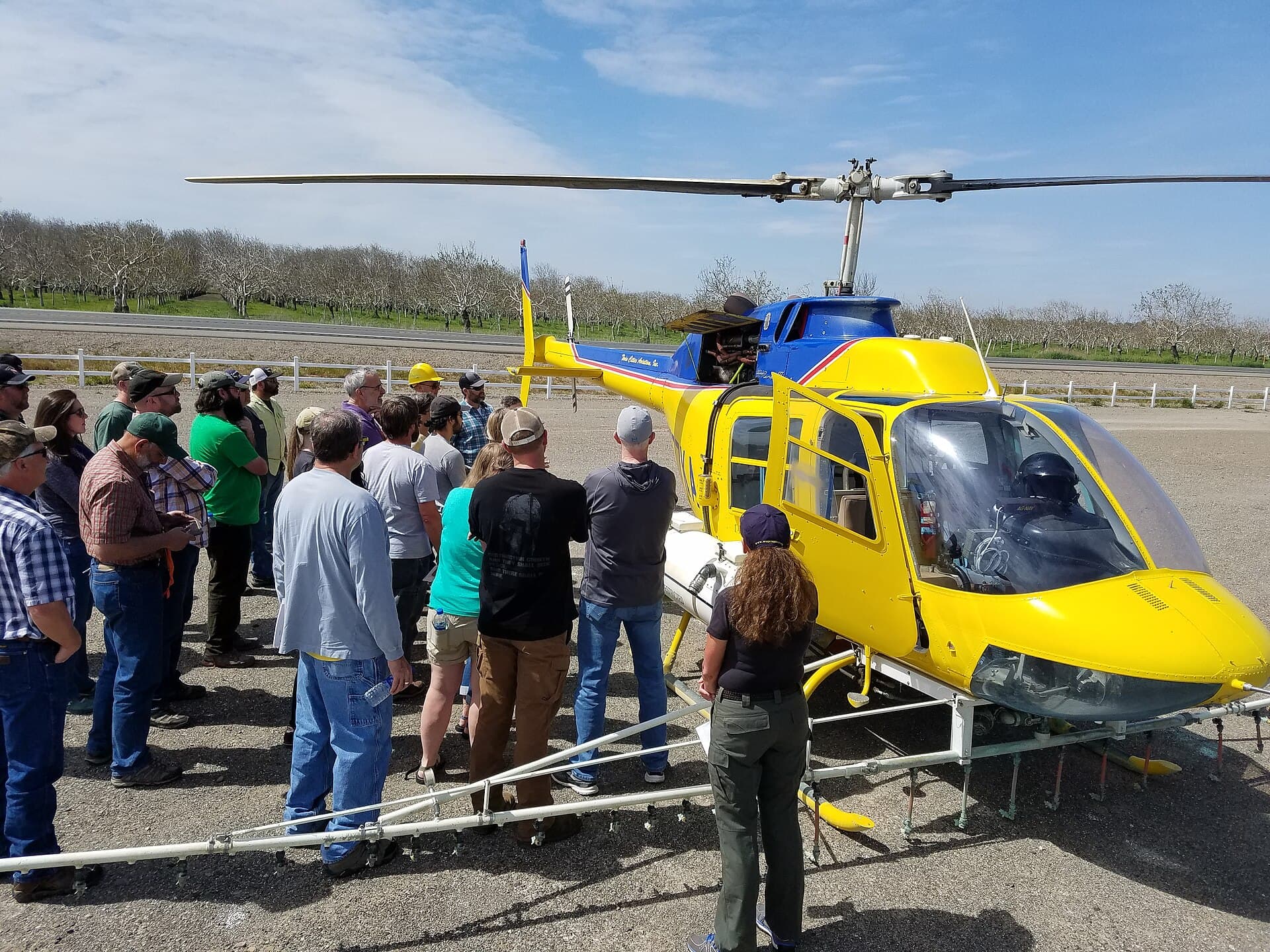
TAMPA — Three helicopters from the Lee County Mosquito Control District were expected to lift off from Tampa Executive Airport around 9:30 a.m. Wednesday to help Hillsborough County’s aerial fight against dengue-carrying mosquitoes.
The aircraft and crews staged at the airport before starting treatment missions aimed at cutting mosquito populations tied to local transmission, FOX 13 reported. Lee County officials told the station the district is among the largest mosquito-control agencies in the country and regularly shares specialized aircraft and crews when neighboring communities face mosquito-borne disease.
The mutual-aid flights build on work Hillsborough already ramped up this week. On Monday, the county said Lee County Mosquito Control District was treating East Lake during daytime hours with a low-flying helicopter, applying liquid Bti — a naturally occurring bacterium that targets mosquito larvae and does not harm people, pets, fish, birds or beneficial insects. A contractor hired by Hillsborough Public Works was running similar daytime larvicide passes over Riverview and Bloomingdale, expected to take two or three days depending on weather and aviation conditions.
Residents in those grids may see helicopters flying just above trees and rooftops, making repeated parallel passes and releasing a visible liquid spray. Neighboring counties donated flight time for the East Lake work; Hillsborough taxpayers cover treatment products and contractor costs, the county said.
Night adulticide over Tampa corridor
Overnight Tuesday into Wednesday, Hillsborough Mosquito Management Services also planned aerial adulticide with Dibrom by helicopter from 7:30 p.m. Sept. 29 to 6 a.m. Sept. 30 over a Tampa corridor stretching from Busch Boulevard south to State Route 60, west to Veteran’s Expressway (excluding Tampa International Airport), and east along the Hillsborough River, Interstate 275, North 21st Street and the Tampa Bypass Canal. Flights were set for about 150 feet altitude at 0.66 ounces per acre, with Sept. 30 and Oct. 1 listed as alternate spray dates if weather forced a scrub.
County crews say mosquito traps in many neighborhoods are showing dengue virus activity, and they are coordinating surveillance and treatment with the Florida Department of Health in Hillsborough County. Residents can call Mosquito Management at (813) 635-5400 or use the county’s online treatment maps for neighborhood notices.
Hillsborough at the center of Florida’s outbreak
According to the Florida Department of Health’s Week 37 arbovirus surveillance report cited by FOX 13, Hillsborough has reported 170 locally acquired dengue cases — nearly 90% of Florida’s local infections this year. Other local counts include Pinellas 7, Miami-Dade 7, Orange 3, Pasco 2 and Palm Beach 1. Statewide through about Sept. 19, Florida had 190 locally acquired cases and 212 travel-associated cases. Surveillance also flagged 17 dengue-positive mosquito pools statewide, including 16 in Hillsborough and one in Pasco.
Hillsborough, Pinellas and Pasco have each declared local states of emergency tied to dengue so they can move resources and mutual aid faster. Dengue spreads through infected Aedes aegypti mosquitoes. Many people never feel sick; those who do can get high fever, severe muscle and joint pain, nausea and flu-like symptoms.
What residents can do
Health and mosquito-control officials urge the “3 Ds”: dress in light-colored long sleeves and pants with closed-toe shoes; defend with an EPA-registered repellent that includes DEET, Picaridin, IR3535 or oil of lemon eucalyptus; and dump or cover standing water around homes every week. Wednesday’s Lee County helicopter deployment is one more piece of a regional push — daytime larvicide, night adulticide and mutual aid — aimed at slowing transmission while residents knock out backyard breeding sites.