

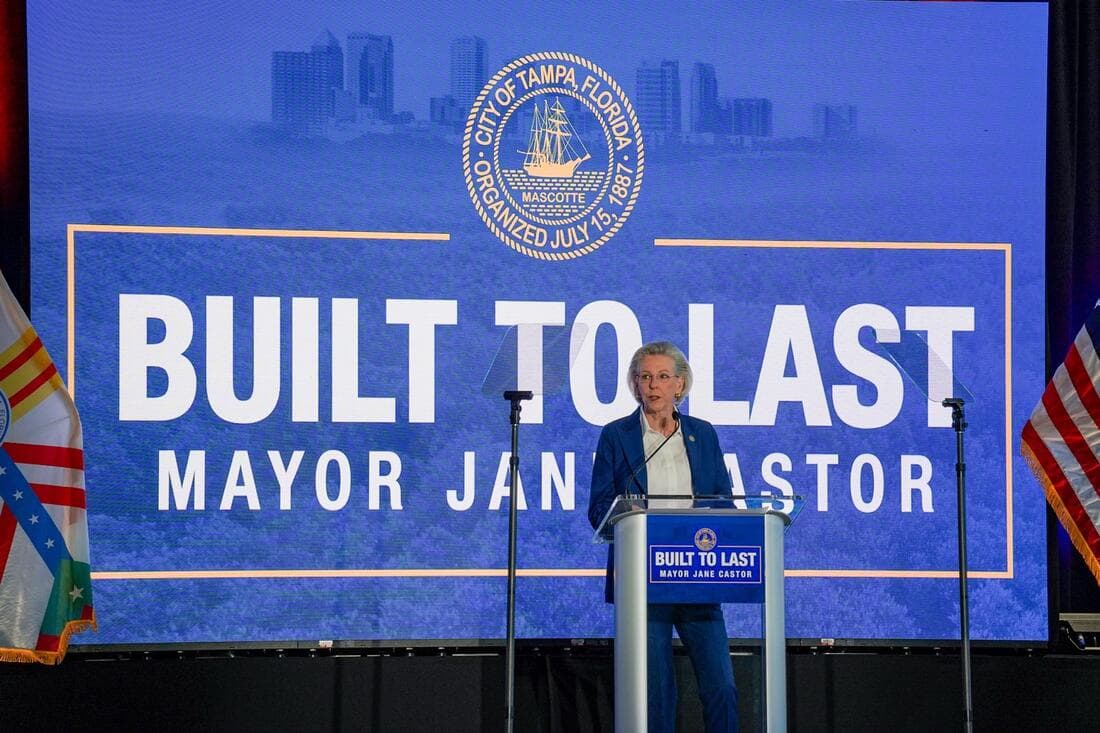
Mayor Jane Castor delivered her 2026 State of the City Address this week, outlining major investments in infrastructure, housing, public safety, transportation and climate resilience, while emphasizing what she called the city’s long-term strategy of “strengthening its foundation” to support continued growth.
“Before you can sustainably grow a city, you have to strengthen its foundation,” said Mayor Castor during her speech.
Throughout the speech, Castor framed the city’s recent investments as part of a broader effort to prepare Tampa for future growth while improving day-to-day quality of life for residents.
Infrastructure
Castor highlighted major investments for the wastewater systems and pipelines.
She said these upgrades are designed to reduce leaks, prevent sinkholes, conserve water and avoid costly system failures.
"Over $3 billion while keeping our water bills among the lowers in the region. We've undertaken more than 100 different pipe projects, replacing more than 78 of aging water lines and rehabilitating more than 210 miles of wastewater lines," Castor said.
Castor said Tampa is a leading American city in removing harmful chemicals from drinking water.
"Right here in Tampa, we're building the largest suspended ion exchange or six facility in the entire world," she said.
This facility will remove forever chemicals, cut chemical use and save taxpayers over $2 million over the year.
Climate resilience
Castor said hundreds of millions of dollars in stormwater and flood mitigation projects, including drainage improvements, pumping stations and debris removal efforts.
"The South Howard project will protect hundred of businesses and homes that are vulnerable to flooding," Castor said. "This project will protect future generations of Tampanians."
More than 24,000 tons of debris was removed from pipes and inlets last year.
"While we cannot stop hurricanes, we can build a city that is prepared to withstand them," Castor said.
The city is also planning a future seawall for Bayshore Blvd. to help against rising waters.
Transportation
Since 2019, the city has paved more than 310 miles of streets, repaired over 100 miles of sidewalks and added 56 miles of bike infrastructure, Castor said, calling mobility a key issue for a growing city.
She said the Riverwalks is one of the best quality of life investment in Tampa's history.
"We're also excited to see the return of the Tampa St. Pete Ferry with daily services and lower rates," Castor said. "As additional fairies are added, we're committed to making this a real option for commuters in the Bay Area."
Castor said that transit expansion remains central to reducing congestion and improving quality of life.
Housing and economic growth
Castor said Tampa permitted nearly $22 billion in permits since she took office.
"More than 23,000 residential units have been added since 2019. More than 8,300 affordable units have been completed or are underway," she said.
She said the city invested hundreds of million in affordable housing and housing assistance since 2019.
"That growth must work for everyone," she said.
Port Tampa Bay has created $34.6 billion in economic impact and supporting more than 192,000 jobs. Tampa International has more non-stops flights than ever before.
Public Safety
Castor said Tampa remains one of the safest large cities in the country, with crime rates at historic lows.
"That happened through strategic policing, community partnerships, proactive crime prevention and smart investment in technology," she said.
In 2025, Tampa Fire Rescue responded to over 10,00 fire calls and over 76,000 rescue calls.
Parks and enviornment
"A city built to last isn't just infrastructure, its connection," Castor said.
Tampa has over 200 parks and completed more than 10,000 improvements to parks. More than 15,000 trees were planted throughout the city.
To end her city address, she closed with reaffirming the city’s commitment to continued investment and growth, saying Tampa will keep building for future generations.