

Florida’s growing population is increasing the demand for healthcare workers, but hospitals across the state are preparing for a projected nursing shortage that could impact patient care.
A 2021 Florida Hospital Association (FHA) analysis projected Florida could face a shortage of more than 50,000 nurses by 2025.
The shortage has created challenges for hospitals, including increased pressure on healthcare workers, staffing concerns and limited resources for patients in need.
FHA President and CEO Mary Mayhew said several factors are contributing to the nursing shortage, and Florida will continue to face workforce challenges as the population grows.
“Today we have over 4.5 million Floridians over the age of 65,” Mayhew said. “As the baby boomer generation ages, the demand for healthcare in Florida will continue to skyrocket.”
Another challenge Florida faces is that many nurses are part of the baby boomer generation and are approaching retirement.
Mayhew said another issue impacting the nursing workforce is that many nursing programs are struggling to attract and retain faculty members.
“We are facing a critical challenge as the aging population in Florida continues to grow dramatically. We have to have the healthcare workforce to respond,” Mayhew said. “All of us depend on having enough nurses. It affects our ability to get timely access to medical appointments. It affects the staffing and availability of services within hospitals and emergency departments.”
Mayhew said the healthcare sector has been one of the few areas to continue seeing job growth. Since 2020, Florida hospitals have added more than 65,000 jobs across multiple healthcare fields, not just nursing.
“Many hospitals established creative programs to engage with high schools around healthcare and career paths. Some have also created earn-while-you-learn programs within their hospitals, so employees can pursue additional degrees,” Mayhew said.
Locally, organizations are working to encourage students to enter the nursing profession.
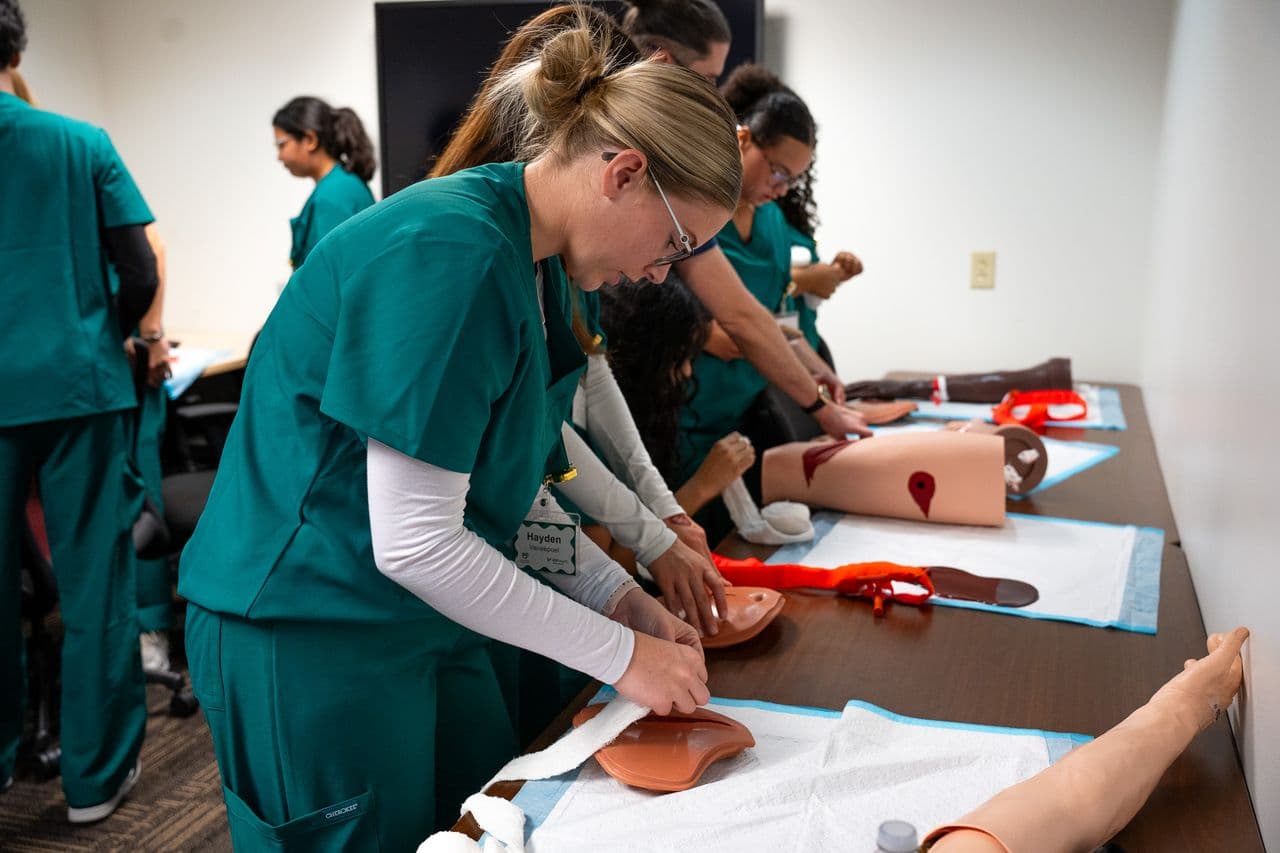
The University of South Florida (USF) and the Pepin Family Foundation partnered to create opportunities for students to learn more about careers in nursing through the Pepin Family USF Nursing Pathway Summer Program.
From June 9-13, 50 selected high school students will gain hands-on exposure to nursing through simulations, skill labs, CPR training and mentorship from nursing faculty and students.
“While we do have strong applicants that come through our bachelor’s program, we need to develop the pipeline. This is a collective issue,” said Usha Menon, dean of the USF College of Nursing.
Menon said as more nurses retire or leave the profession, younger generations may have fewer mentors entering the field.
“There are two issues happening. One, which USF fortunately has not seen, is a trend of lower numbers being enrolled in and completing bachelor’s programs in nursing, and we don’t know if that will come hit us at some point or not,” Menon said. “The second part of the pipeline issue is that we have nurses who are completely burned out emotionally and physically.”
Menon said surveys she has reviewed show a trend of nurses leaving the profession or retiring earlier than expected.
Programs like the one hosted by USF and the Pepin Family Foundation aim to introduce younger students to the field and encourage them to pursue healthcare careers.
“Through our support for healthcare initiatives across Tampa Bay, we’ve seen firsthand the dedication and sacrifice of nurses and healthcare professionals,” said Tina Pepin with the Pepin Family Foundation. “So when we learned about the growing workforce shortage, we saw an opportunity to help inspire younger people to enter this profession.”
Pepin said supporting the next generation of healthcare workers is important for the future of the community.
“It is one of the most meaningful investments we can make and is good for a strong community,” Pepin said.
This is the fourth year Pepin has hosted the event, and organizers hope to continue expanding the program.
“When students can see themselves in a healthcare setting, they begin to imagine what’s possible for their future,” Pepin said. “This program fills in the gap as far as there’s no financial burden. Giving them exposure and the hands-on experience they maybe wouldn’t have is very exciting.”
Although the nursing shortage is expected to continue impacting Florida over the next decade, Tampa Bay organizations are working to create pathways for future nurses through education, mentorship and early exposure to the profession.