


Why the quiet anxiety about "getting in" does more damage than flashy market envy
A young professional I advised had been talking about investing for three years. Every market dip, she'd say "now's the time." Every bull run, she'd kick herself for waiting. But when it came time to actually open that brokerage account, transfer the money, and buy her first index fund, she'd find a reason to wait another month.
"What if I pick the wrong time?" she'd wonder. "What if I mess up the allocation? What if there's a crash next week?"
She wasn't suffering from FOMO, fear of missing out on the latest hot stock or crypto craze. She had something far more destructive: FOGI. Fear of getting in.
And after three decades of helping high-net-worth professionals navigate financial decisions at PwC, I can tell you that FOGI ruins more financial futures than FOMO ever will.
The Fear No One Talks About
We've all heard about FOMO. It's the flashy villain of personal finance. The force that drives people to chase meme stocks, jump into crypto at the peak, or dump their savings into whatever's trending on social media.
But in my work helping people build wealth strategies, I've identified a more insidious problem: FOGI. Fear of getting in. It operates in the shadows, and it's not about making bad financial moves; it's about making no moves at all.
FOGI shows up as:
- Analysis paralysis that keeps you researching the "perfect" investment strategy for months
- Waiting for the "right time" to start saving, investing, or planning for retirement
- Avoiding your 401(k) because the options seem too complicated
- Procrastinating on creating a budget because facing your spending feels overwhelming
- Delaying financial conversations with your spouse to avoid potential conflict
While FOMO gets you into trouble with bad decisions, FOGI keeps you from making any decisions, which, in the long run, is often worse.
The Math of Standing Still
Consider two investors in their 30s, each with $10,000 to invest:
FOMO Fred jumps into whatever's hot. He puts his money into a trendy tech fund that swings wildly, sometimes up 30%, sometimes down 20%. Over 30 years, despite the volatility and some bad timing, his imperfect investments average 8% annually. His $10,000 becomes $100,627.
FOGI Sarah spends three years researching, comparing, and waiting for the perfect moment. When she finally invests that same $10,000, she chooses a solid, diversified portfolio that averages 9% annually. But she lost three years. Her $10,000 becomes $94,334.
Fred's imperfect action beat Sarah's perfect paralysis by more than $6,000—and that's with a lower return rate.
Why We Fear Getting Started More Than Getting It Wrong
FOGI isn't rational, but it's predictable. Our brains are wired to avoid losses more than we seek gains; a bias psychologists call loss aversion. The possibility of losing money feels twice as painful as the pleasure of gaining the same amount of money.
But there's another layer: perfectionism. Many people delay financial action because they want to optimize every variable first. They research asset allocation models, compare expense ratios down to the basis point, and read endless articles about market timing.
This perfectionist approach backfires because:
- Perfect information doesn't exist in financial markets
- The cost of waiting often exceeds the cost of imperfection
- Analysis paralysis compounds the longer you delay
Meanwhile, the real enemy isn't making a suboptimal investment choice. It's time. Every month you delay starting is a month of potential compound growth you'll never get back.
The FOGI Antidote: Good Enough to Get Started
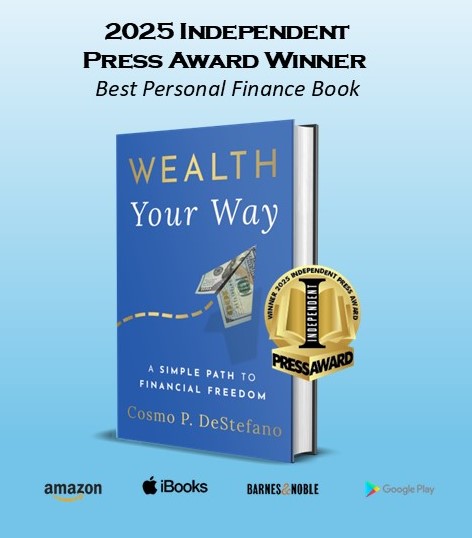
The solution isn't to eliminate analysis or make reckless decisions. It's to find the minimum viable action that gets you moving. As I emphasize throughout my book "Wealth Your Way," Just. Get. Started.
For investing: Don't spend months researching the perfect portfolio. Start with a target-date fund in your 401(k) or a simple three-fund portfolio. You can optimize later.
For budgeting: Don't build a complex spreadsheet with 47 categories. Track your spending for one month, identify your top three expenses, and focus on those.
For retirement planning: Don't wait until you've calculated your exact needs down to the dollar. Start with the rule of thumb (save 10-15% of income) and refine as you go.
For emergency funds: Don't delay building an emergency fund because you're debating whether it should be three months or six months of expenses. Start with $1,000, then build from there.
The goal isn't perfection. It's momentum.
Breaking the FOGI Loop
Here's how to recognize and overcome FOGI in your own financial life:
Identify your FOGI triggers. What financial tasks do you keep "meaning to do" but never start? Write them down.
Set artificial deadlines. Give yourself one week to research, then act. Imperfect action beats perfect inaction.
Start ridiculously small. Can't invest $500 a month? Start with $50. Can't save 15% of your income? Start with 2%. Building the habit matters more than the initial amount.
Embrace iteration. Your first financial plan won't be your last. You can adjust, optimize, and improve, but only after you've started.
Focus on the cost of delay. Every month you wait to start investing in your 20s costs you hundreds of dollars in retirement. Every year you delay getting serious about retirement planning is a year of compound growth lost forever.
The Time Tax No One Mentions
That young professional eventually did start investing. Three years later than planned, but she started. Today, she wishes she'd begun with an imperfect portfolio rather than waiting for the illusory perfect one.
"I was so worried about making the wrong choice that I made the worst choice of all. No choice."
Her story isn't unique.
The financial media obsesses over FOMO because it's dramatic and clickable. But FOGI, the quiet fear that keeps people on the sidelines, is the real wealth killer. It's the tax on perfection that compounds silently, month after month, year after year.
Don't let the perfect become the enemy of the profitable. Your future self will thank you for starting today, not for starting perfectly someday.
Cosmo DeStefano is a former PwC partner and author of "Wealth Your Way: A Simple Path to Financial Freedom." He helps people build wealth through strategy, not speculation.